



HAND HYGIENE COMPLIANCE RATES AND BARRIERS IN PEDIATRIC UNITS IN GREECE
METHODS: Observational study for HH rates was carried out in 15 NICUs, 4 PICUs and 6 oncology units (June 2016-February 2017) in 14 Greek hospitals. Using a data collection tool based on WHO guidelines, observations were collected during all shifts by trained observers. Compliance and appropriateness rates were defined as follows: [(number of performed actions/number of opportunities)x100] and [(number of appropriate performed actions/number of performed actions)x100] respectively. At the end of this period, a questionnaire was given in paper form to HCWs to identify the barriers of HH compliance.
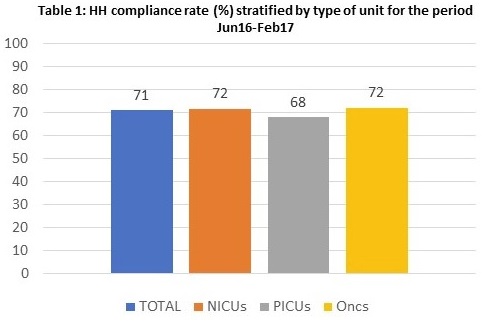
RESULTS: A total of 6472 HH opportunities were observed.The total HH compliance rate was 71% and did not differ by unit type.The rate of appropriate HH was 52%(Table 1).The response rate among 749 HCWs from all units was 48%.Since the actual number of HCWs receiving the questionnaire was not available. Response rate is underestimated.Emergency situations(73%), distraction from other responsibilities necessary for patient care(47%), heavy workload(34%), skin irritation from hand products(24%) were the most frequent answers.Almost half of the responders did not participate in any HH educational activity during the previous year.
CONCLUSIONS: HH compliance rates among pediatric departments are high. However, opportunities for improvement exist. Educational interventions can be designed according to HCWs barriers for increasing HH compliance rate.