


Healthcare-Associated Factors Correlated with Nosocomial Neonatal Enterococcal Infection
METHODS: neonIN is a collaborative, multi-national, neonatal infection surveillance network which receives prospectively-collected infection data from 60 units worldwide (UK, Greece, Estonia, Australia). Infections cases from 2011-2016 were extracted from neonIN, with infection defined as a positive culture from a sterile site (e.g. blood, cerebrospinal fluid). Case data were then pooled with the findings of a unit-specific questionnaire distributed to all neonIN units. The questionnaire covered basic unit characteristics, based on British Association of Perinatal Medicine (BAPM) standards, and healthcare practices and policies data from 2011-2016. Univariate and multivariate analyses were performed using the Stata 14 statistical package.
RESULTS: 24 of 60 units (40%) responded to the survey, of which 21 were Level-3 (NICUs). Table 1 shows the influence of various healthcare-associated factors on the risk of enterococcal versus other infections. An increasing number of trainee medical staff was associated with an increased risk of enterococcal infection (per 1 increase: OR 1.06, 95% CI 1.00-1.12, p=0.050) while the ratio of nurse:patient did not have any significant influence.
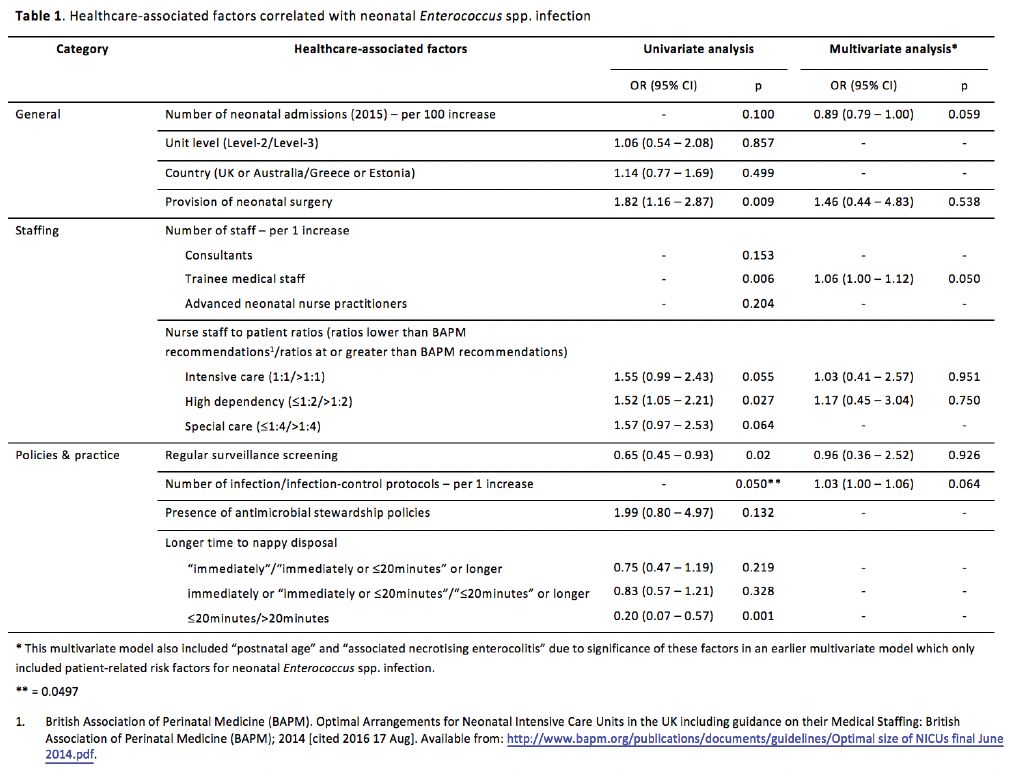
CONCLUSIONS: Our study suggests that traditional healthcare-associated factors have little influence on the risk of neonatal enterococcal infection; strategies for preventing this infection should therefore focus on different risk factors.